Cabling and Bracing to Save a Weak Tree

By Tree Emergency Expert
Tree Emergency Expert
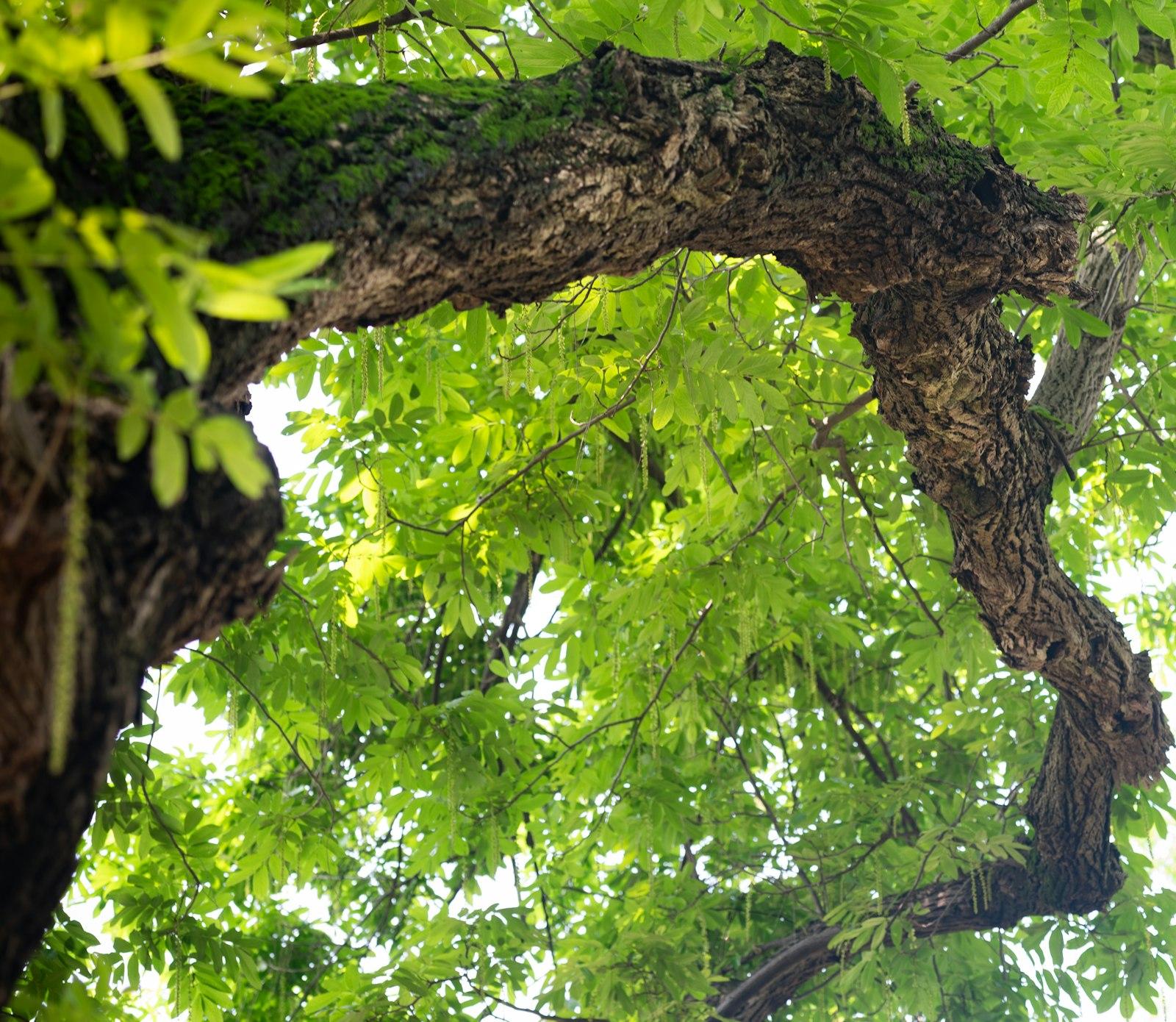
A split fork or heavy leaning limb does not always mean removal. Cabling and bracing can add years of safe life to a valuable tree when it is the right fit.
Not every structurally weak tree needs to come down. A mature shade tree that anchors your yard, cools your home, and took decades to grow is worth trying to save when it can be made safe. Cabling and bracing are the tools certified arborists use to support a compromised tree and extend its safe life, and when they are the right fit, they can prevent a failure that would otherwise put your home at risk.
What Cabling and Bracing Actually Do
These are two related support systems that reduce the load on weak points in a tree's structure.
Cabling installs flexible steel or synthetic cables high in the canopy to limit how far limbs can move in wind. It reduces stress on weak unions and keeps a heavy limb from tearing out.
Bracing uses threaded steel rods installed through or across a defect, such as a split fork, to hold the parts together rigidly.
Used together, they let a tree keep flexing naturally while capping the extreme movement that causes catastrophic failure. This is skilled, hardware-specific work; it is not a rope thrown over a branch.
When Support Makes Sense
Cabling and bracing are best suited to trees that are fundamentally healthy but carry a fixable structural flaw. Good candidates include:
Co-dominant stems with a tight, V-shaped union that is starting to split.
A single heavy limb overextended toward a house, driveway, or play area.
A minor crack or included bark at a fork that has not yet failed.
A high-value specimen whose loss would meaningfully change your property.
The key word is fundamentally healthy. Support systems manage a specific weakness; they cannot fix a tree that is dying or riddled with decay.
When Removal Is the Honest Answer
An ethical arborist will tell you when hardware is only postponing the inevitable. Cabling and bracing are the wrong call when:
The trunk or major limbs have extensive internal decay or large cavities.
The tree has a compromised root system or is leaning from root failure.
The defect is so advanced that failure is likely regardless of support.
Share this article:
Need help with this right now?
We respond 24/7. Call (866) 320-7003 or start with the page that matches your situation.
Related Articles
Providence Storm Tree Damage: A Rhode Island Guide
Nor'easters, hurricane remnants, and the legacy of the 1938 hurricane each threaten trees. Here is how Providence storms cause damage and how to prepare.
Filing a Farmers Tree Damage Claim: A Practical Guide
A well-documented Farmers tree damage claim settles more smoothly. Here is how to make the scene safe, record the evidence, report the loss, and work with your adjuster.

How to Tell If a Tree Is Dead or Dying
Need Emergency Tree Service?
Our team of certified arborists is available 24/7 to handle any tree emergency.