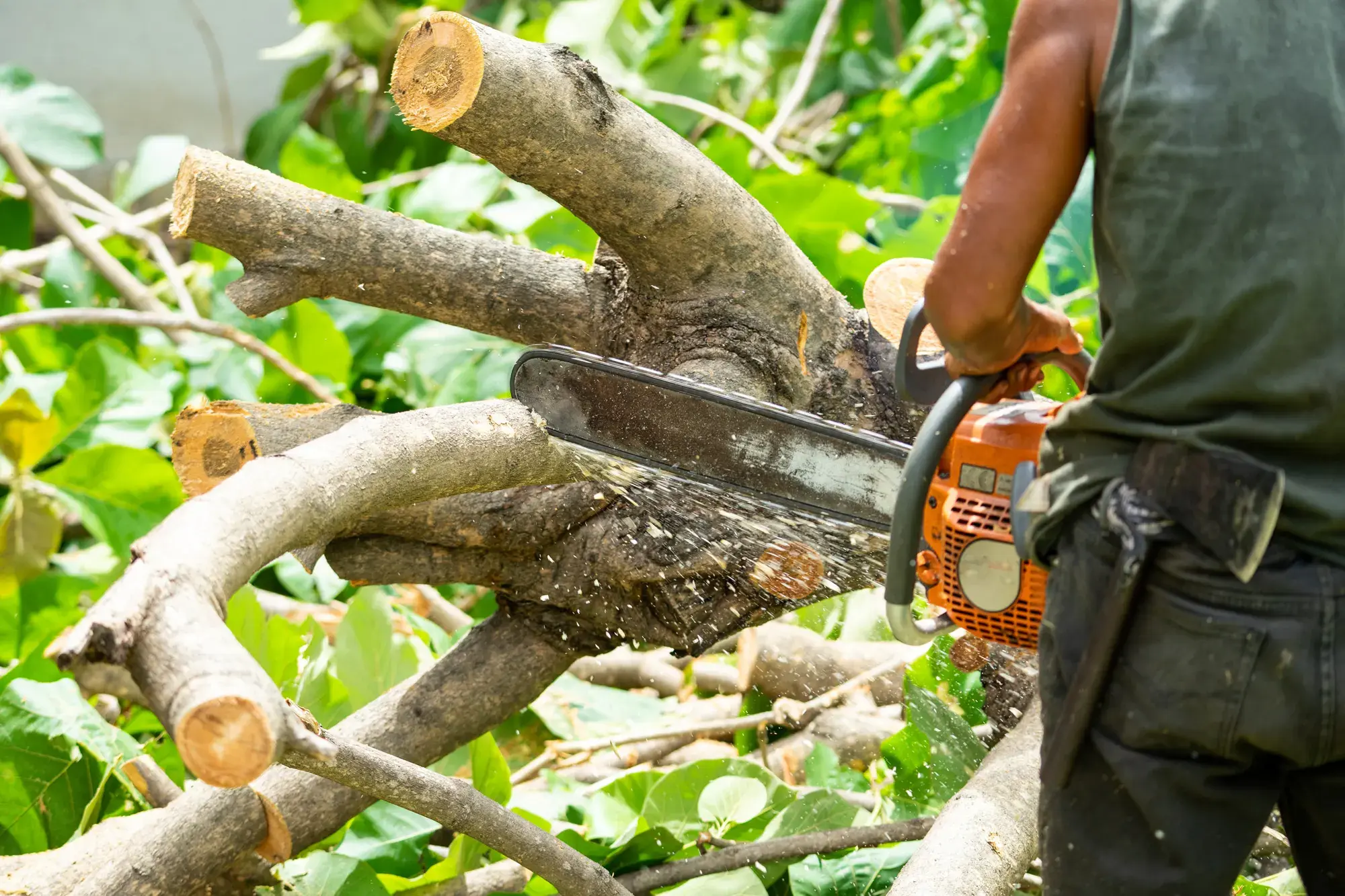
Emergency Crane Tree Removal — When a Tree Is Too Big or Too Close to Cut Down
Some trees can't be felled or climbed safely — a massive trunk over the roof, a tree wedged in a tight urban lot, a giant lying across the house. A crane lifts each piece straight up and away, so nothing drags across what you're trying to protect.
Had a tree fall in my parents yard. I called 1 tree emergency and they offered quick response and were able to take care of the tree removal and ensure everything was done safely. They helped explain the options and gave multiple solutions for us to consider. Appreciate the great work they did and would definitely call them again if the need arises. Highly recommend.

Laura Schwartz
Google review
Free Estimate
Quick form for fast response
When a job clearly needs a crane — what to know first
- 1
Keep clear of the tree and the area around it — a large trunk resting on a structure is holding enormous weight and can shift if it's disturbed.
- 2
Don't let anyone try to cut a big trunk off a roof by hand; releasing that load without a crane or rigging can drop tons of wood onto the building.
- 3
Note the access: where a crane could set up, whether the street can be closed, and where power lines run. Share this when you call so we bring the right rig.
- 4
If the tree is on or near power lines, stay at least 50 feet back and call your utility — crane work near energized lines requires the line de-energized first.
- 5
Photograph the tree and the structure it's on from a safe distance for your insurance claim before any work begins.
- 6
Call 1 Tree Emergency at (866) 320-7003. We'll assess whether the pick needs a crane and dispatch a crane-equipped crew 24/7.
A crane isn't a luxury on these jobs — it's the safe way to do them.
Most tree work is done from the ground or by a climber with ropes. But some situations put that approach off the table: a trunk too massive to lower by rigging, a tree with no safe space to fell it into, a tree already collapsed onto a roof, or a lot so tight that every piece has to be lifted out over the house or into the street. In those cases a crane isn't about speed — it's the difference between a controlled removal and gambling with tons of wood over your home.
The core idea of a crane removal is simple: before a cut is made, the crane takes hold of the section so it's supported the instant it's separated. Nothing falls, nothing swings, and no weight travels down through a damaged trunk or across a fragile roof. The operator lifts each piece straight up, swings it clear of the structure, and sets it down in a safe drop zone — the street, the driveway, or an open staging area.
This is skilled, coordinated work. A certified arborist plans each pick — where to cut, how much the section weighs, how the crane will carry it — and works in tight communication with the crane operator. Done right, an enormous tree comes off a house piece by piece with the roof no worse for it.
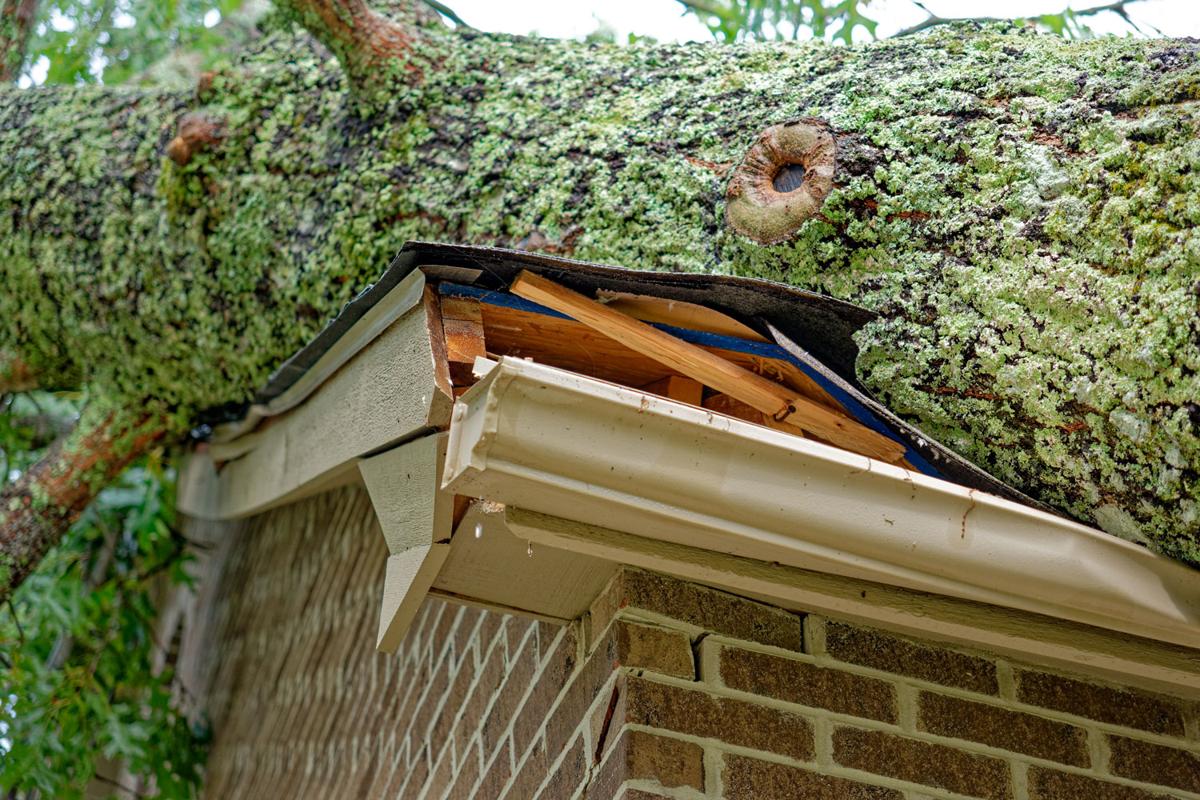
Each section supported before the cut, lifted straight up, and set down clear of the structure
We respond in minutes, not hours
Our network of certified arborists is on standby 24/7 to handle any tree emergency. From fallen trees to dangerous limbs, we provide rapid response to protect your property.
Why Choose Us
- Certified Experts
All our arborists are certified and fully insured
- Rapid Response
Average response time under 30 minutes
- Insurance Specialists
We handle all insurance paperwork for you
How a crane removal works
Clear steps. Fast action. Zero guesswork.
How We Handle Your Tree Emergency
Our streamlined process ensures quick response and efficient resolution of your tree emergency
Step :You Call, We Answer
Call (866) 320-7003 any hour. Describe the tree and the site — size, what it's on, and the access — so we send a crane rig matched to the job.
Step :Crane Crew Dispatched
A crane, operator, and arborist-led ground crew roll out together. We confirm setup space and coordinate any street closure before arrival where we can.
Step :Rig the Pick
The arborist plans each section — cut points, estimated weight, lift path — and the operator positions the crane and outriggers on stable ground.
Step :Protect the Structure
We set the lift path to carry every piece up and away from the roof, never over people, and never letting a section swing into the building.
Step :Pick by Pick
The crane takes the load of each section before it's cut free, then lifts it clear — so no weight ever drops onto the structure or trunk below.
Step :Drop Zone & Cleanup
Sections are set down in a controlled staging area, then bucked, chipped, and hauled off so the site is left clear.
Step :Documentation Packet
Photos of the tree, the structure, and the removal go into a packet for your insurance claim.
What a crane brings that ground work can't
Vertical Lift Over Structures
The crane carries each section straight up and out, so weight never travels across a compromised roof or through a damaged trunk — the safest path off a building.
Tight-Access Removals
In dense urban lots with no room to fell or lower a tree, the crane reaches over the house and sets pieces down in the street or driveway instead.
Engineered Picks
Each lift is planned to the section's weight and the crane's rated capacity by a certified arborist, so nothing is lifted beyond a safe margin.
Massive-Trunk Capacity
For trunks far too heavy to rig down by rope, the crane handles the tonnage that ground-based lowering simply can't.
Our removals are led by ISA Certified Arborists. Around downed or damaged power lines, always follow your electric utility and the Electrical Safety Foundation — never approach a line yourself.
Crane removal and your insurance claim
When a large tree damages an insured structure, the removal is typically part of the covered claim — and if the safe way to get that tree off your home is a crane, that method is generally treated as part of the reasonable cost of removal. What insurers want to see is that the approach was justified by the situation.
We document why the pick required a crane — the trunk size, the position on the structure, the access constraints — along with photos of the tree and the damage. That record helps your adjuster understand the scope, so the crane cost is evaluated in context rather than questioned in isolation.
Learn more about our insurance claim support for tree damage — we document the scene and coordinate directly with your carrier.
Frequently Asked Questions
When does a tree removal actually require a crane?
A crane is called for when a tree can't be safely felled or lowered by rope — typically a very large trunk resting on a structure, a tree in a lot with no room to drop it, a tree already down on a roof, or a site where pieces must be lifted over the house. In those cases the crane supports each section before it's cut, so no heavy load ever falls onto what you're protecting.
How does a crane removal protect my house?
The crane takes the weight of a section the moment before it's separated, then lifts it straight up and swings it away from the structure to a drop zone. Because the load is always supported and the lift path avoids the roof, no weight drags across your shingles and no section swings into the walls — the tree comes off in controlled pieces rather than crashing down.
Can a crane reach a tree in a tight backyard or on a city street?
Often yes. Cranes can reach over a house from the street or driveway to pick a tree out of a backyard with no ground access. What matters is stable setup space for the crane and its outriggers and a clear lift path. When you call, describe the access and we'll match the right crane to the site — and arrange a street closure if the job needs one.
Is crane removal safe near power lines?
Only after the lines are de-energized. A crane and its load must stay well clear of energized conductors, so when a tree is on or near power lines we coordinate with the utility to shut the line down before we set up. We never operate a crane around a live line — that's non-negotiable for the crew's safety and yours.
Is a crane removal more expensive than regular tree removal?
A crane adds equipment and operator cost, but on the jobs that need one it's frequently faster and far safer than the alternative — and it prevents the secondary damage that dropping or dragging a huge tree would cause. When a tree is on your house, the crane is usually part of a covered removal claim. We'll explain why the pick needs a crane before any work starts.
Related Tree Emergencies We Handle
Facing a different situation? We respond to every kind of tree emergency, 24/7:
What Happens Next
From the first call to a closed insurance claim, here's how we help:
From Our Blog
Practical guides from our certified arborists:
Get Emergency Help Now
We're available 24/7. Call (866) 320-7003 or request service below.
Get in Touch
Our team is available 24/7 to respond to your emergency or answer any questions
Contact Information
Location
254 Prospect Ave, Hartford, CT, 06106
Serving clients nationwide