It Hasn't Fallen Yet — Removing a Dangerous Tree Before It Does
A tree leaning over your house, a lifting root plate, a split trunk, or a dead limb hanging over the driveway — these are failures waiting to happen. We take them down safely, before gravity decides the timing.
Had a tree fall in my parents yard. I called 1 tree emergency and they offered quick response and were able to take care of the tree removal and ensure everything was done safely. They helped explain the options and gave multiple solutions for us to consider. Appreciate the great work they did and would definitely call them again if the need arises. Highly recommend.

Laura Schwartz
Google review
Free Estimate
Quick form for fast response
You spotted a tree that looks ready to fail — what to do now
- 1
Keep people out from under it. Move cars, close off the area below the tree, and don't let anyone linger where it would land if it goes.
- 2
Watch for the warning signs: a fresh lean, soil heaving or cracking around the base, a split or cracked trunk, or large dead limbs hanging in the canopy.
- 3
Don't try to prop it, cable it, or cut into it yourself — a loaded or leaning tree is under enormous stored tension and can fail violently and unpredictably.
- 4
If it's leaning toward or touching power lines, stay at least 50 feet away and call your utility — never approach a tree in contact with a line.
- 5
Photograph the lean, the base, and any cracks from a safe distance — useful for both an arborist assessment and a potential claim.
- 6
Call 1 Tree Emergency at (866) 320-7003. We answer 24/7, assess how imminent the failure is, and remove the tree before it comes down on its own.
The most dangerous tree is often the one still standing.
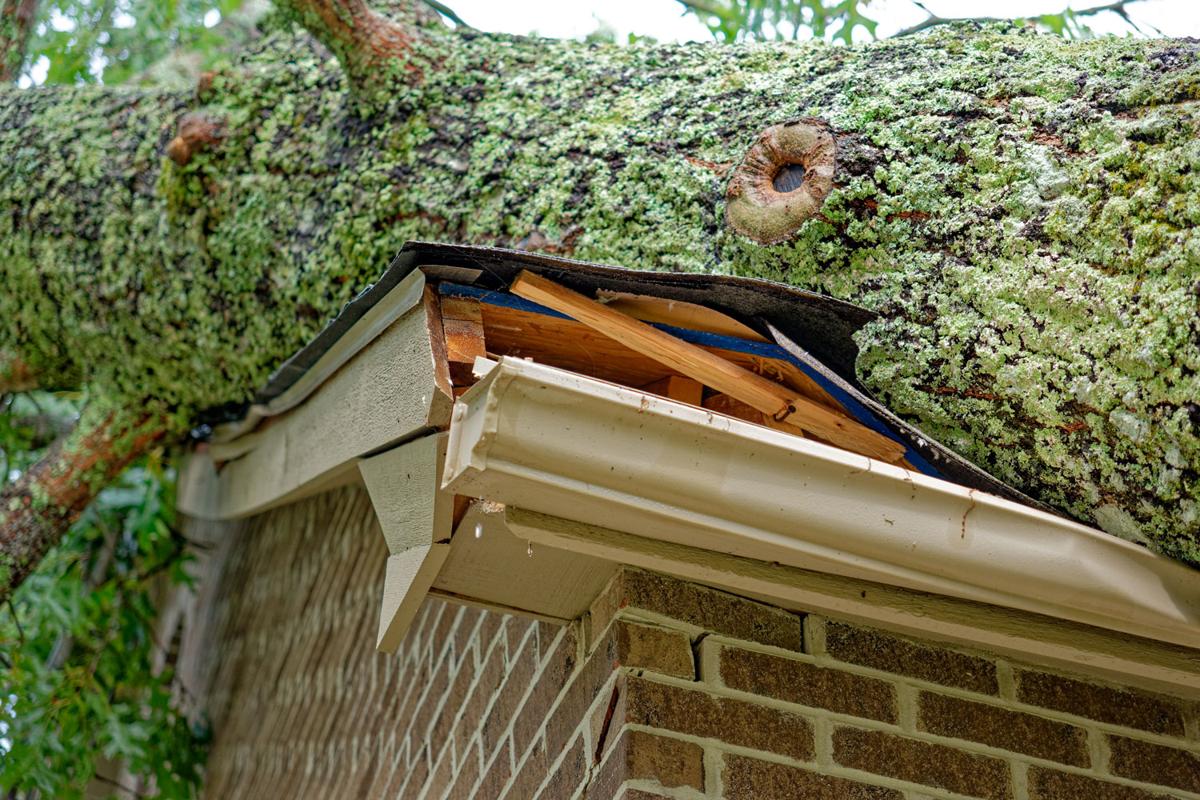
A tree that has already fallen is a known quantity — you can see the damage and plan the removal. A tree that is failing but hasn't dropped yet is more dangerous, because no one knows the moment it will go. A storm-loosened lean, a root plate pulling out of the ground, a cracked or hollow trunk, or a heavy dead limb over the roof are all failures in progress. Our job is to remove them on our schedule, safely, instead of on the tree's.
Our certified arborists start by reading the tree: the direction and progression of the lean, the condition of the root plate and soil, decay and cracks in the trunk, and the weight and attachment of any dead limbs. That assessment tells us how urgent the removal is and how to take the tree down without triggering the very failure we're trying to prevent.
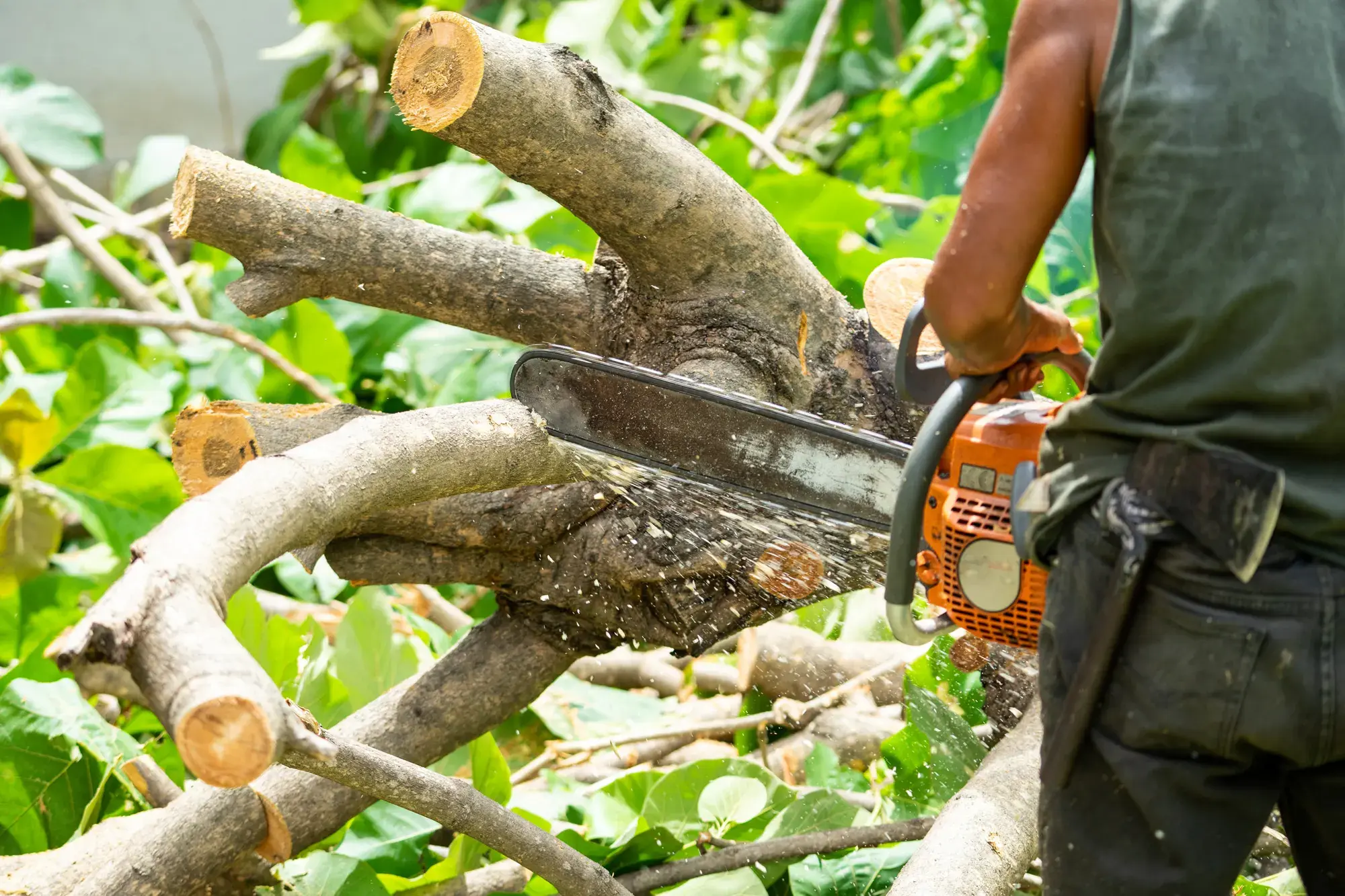
Removal of a compromised tree is a controlled, piece-by-piece process. Rather than felling a structurally unsound tree in one drop — which invites an uncontrolled failure — we rig or crane it down section by section, keeping the load and the fall zone under control the entire time.
Compromised tree taken down section by section, fall zone controlled throughout
We respond in minutes, not hours
Our network of certified arborists is on standby 24/7 to handle any tree emergency. From fallen trees to dangerous limbs, we provide rapid response to protect your property.
Why Choose Us
- Certified Experts
All our arborists are certified and fully insured
- Rapid Response
Average response time under 30 minutes
- Insurance Specialists
We handle all insurance paperwork for you
How we handle an imminent-hazard tree
Clear steps. Fast action. Zero guesswork.
How We Handle Your Tree Emergency
Our streamlined process ensures quick response and efficient resolution of your tree emergency
Step :You Call, We Answer
Call (866) 320-7003 any hour. Describe what you're seeing — the lean, the cracks, the dead limbs — and we dispatch an arborist to assess and act.
Step :Arborist On-Site
A certified arborist arrives to evaluate the tree in person — many hazard failures aren't obvious from a phone description alone.
Step :Failure Assessment
We read the lean, root plate, trunk condition, and canopy to judge how imminent the failure is and set the fall zone off-limits.
Step :Secure the Zone
We move vehicles, cordon off the area beneath the tree, and coordinate with the utility if the tree threatens power lines.
Step :Controlled Takedown
We rig or crane the tree down in sections so an already-weakened trunk never fails on its own — we take the weight, not gravity.
Step :Clean Removal
Sections are lowered, bucked, and chipped, and the debris is hauled off so the hazard and its wreckage are both gone.
Step :Assessment Notes
An arborist's written assessment of the defects we found supports insurance or documents the hazard for your records.
What makes a dangerous-tree removal safe
Arborist Hazard Evaluation
A credentialed arborist judges how close a tree is to failure and plans a removal that doesn't provoke it — the whole job hinges on reading the tree correctly.
Controlled Rigging
Ropes, blocks, and lowering devices let us take a compromised tree apart in pieces, keeping every section under tension control instead of dropping it.
Crane Support
When a tree is too unstable to climb or fell, a crane lifts each section straight up and out, so no load ever passes through the failing trunk.
Utility Coordination
For trees leaning into or near power lines, we coordinate de-energizing with the utility before removal — we never work an energized line.
Our removals are led by ISA Certified Arborists. Around downed or damaged power lines, always follow your electric utility and the Electrical Safety Foundation — never approach a line yourself.
Does insurance cover removing a dangerous tree?
This is where expectations and reality often differ. Homeowners policies generally cover tree removal after a covered peril causes damage — but a tree that is merely hazardous and hasn't fallen or damaged anything yet is frequently treated as maintenance, and not covered. Coverage can shift if a storm caused the defect, so the cause matters.
Because the answer depends on how the hazard arose, documentation is worth having. Our arborist notes what we find — the storm-related lean, the fresh root failure, the cracking — which gives you the record to make the strongest possible case to your carrier, whatever they ultimately decide.
Learn more about our insurance claim support for tree damage — we document the scene and coordinate directly with your carrier.
Frequently Asked Questions
How can I tell if a tree is actually about to fall?
The clearest warning signs are a new or worsening lean, soil that's heaving or cracking around the base (a lifting root plate), a visible split or crack in the trunk, and large dead limbs hanging in the canopy. Any one of these means the tree should be evaluated by an arborist promptly — and if the ground is moving at the base, treat it as an active emergency.
Is a leaning tree always dangerous?
Not always — some trees have grown at an angle for years and are stable. What matters is whether the lean is new or increasing, and whether the base shows signs of root failure. A sudden lean after a storm, especially with heaving soil, is a serious hazard. A certified arborist can tell the difference between an old habit and an active failure.
Why not just cut the tree down in one piece?
Because a structurally compromised tree can fail mid-cut in an uncontrolled direction. Felling relies on the trunk holding together through the cut, and a cracked, hollow, or root-failed tree can't be trusted to do that. We take these trees down in controlled sections with rigging or a crane so the failure never gets a chance to happen on its own.
Can you remove a dead tree that's hanging over my house?
Yes, and it's exactly the kind of job to handle before a storm forces the issue. A dead tree over a structure loses strength continuously and drops limbs without warning. We remove it in controlled pieces — craning sections away from the roof when needed — so it comes down on our terms rather than onto your house.
How fast can you remove an imminent-hazard tree?
We treat a tree that's actively failing as an emergency and respond 24/7. An arborist can typically be on-site within a couple of hours to assess urgency, and if the failure is imminent we secure the zone and begin removal the same visit. Call (866) 320-7003 and describe what you're seeing so we can prioritize appropriately.
Related Tree Emergencies We Handle
Facing a different situation? We respond to every kind of tree emergency, 24/7:
What Happens Next
From the first call to a closed insurance claim, here's how we help:
From Our Blog
Practical guides from our certified arborists:
Get Emergency Help Now
We're available 24/7. Call (866) 320-7003 or request service below.
Get in Touch
Our team is available 24/7 to respond to your emergency or answer any questions
Contact Information
Location
254 Prospect Ave, Hartford, CT, 06106
Serving clients nationwide